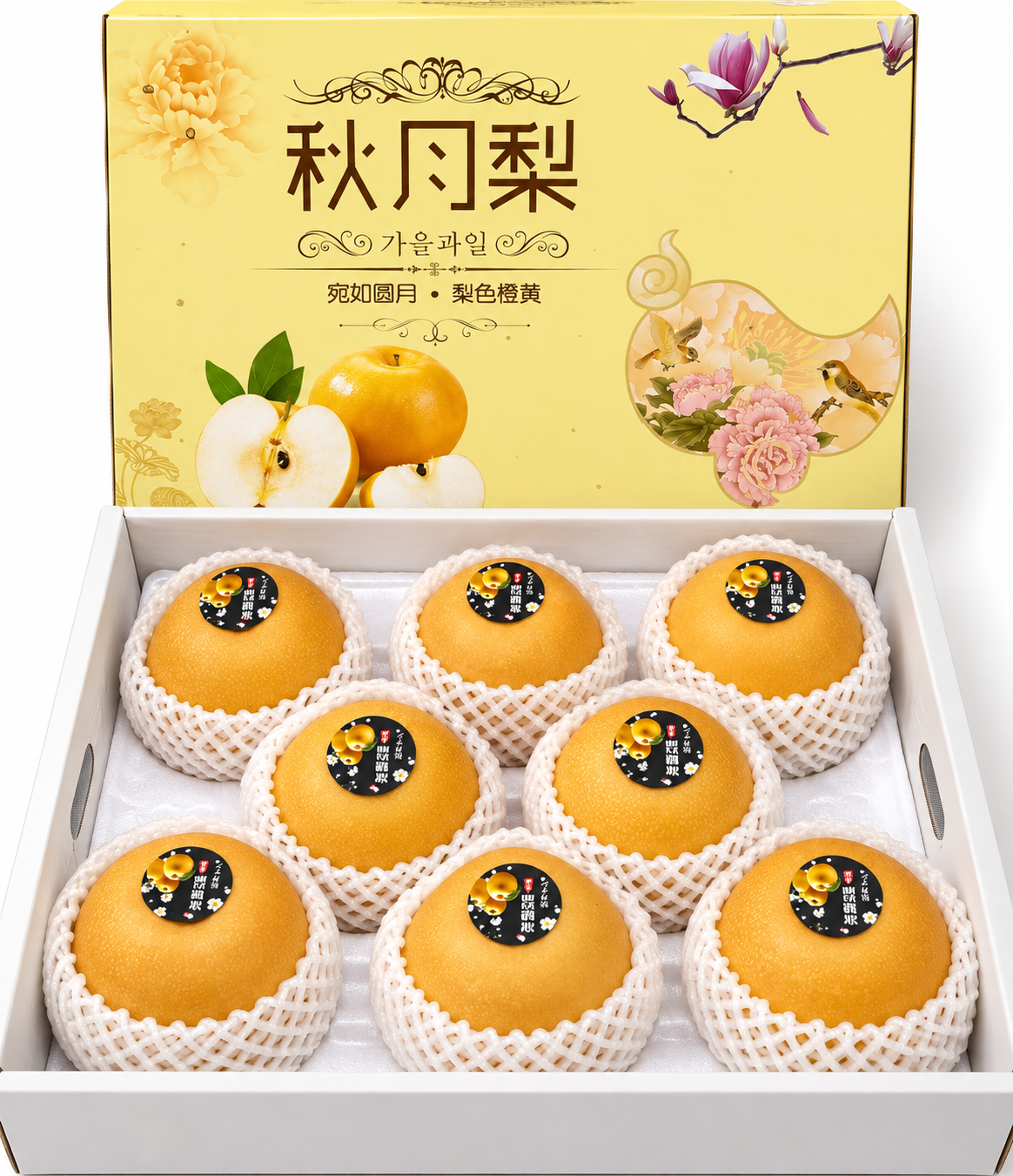
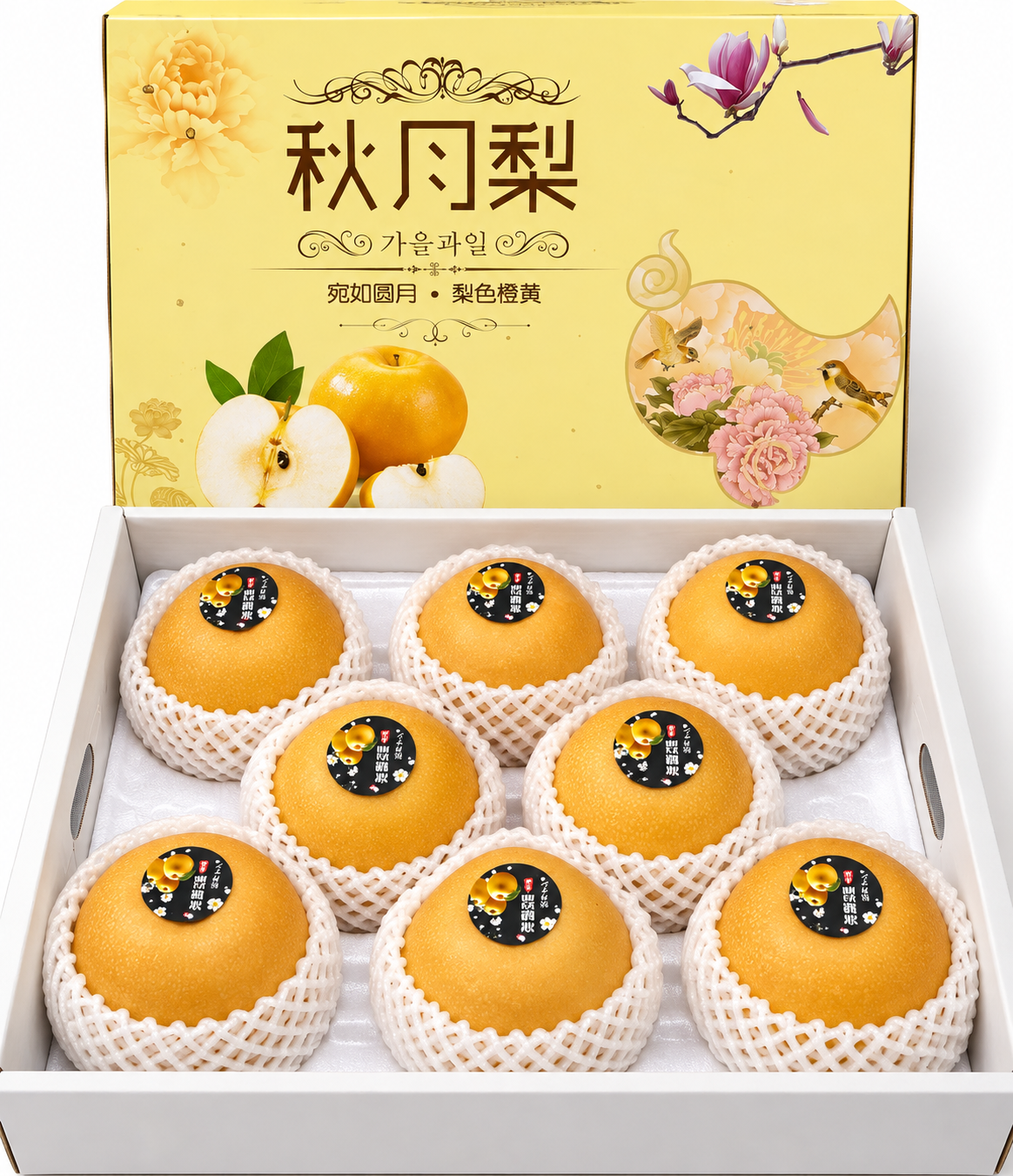
The Akizuki pear is a hybrid pear variety introduced from Japan to China in 2002. It was developed and named in 1998 by the Fruit Tree Research Station of Japan's Ministry of Agriculture, Forestry, and Fisheries by crossing 162-29 (a crossbreed of Niitaka pear × Hosui pear) with Kosui pear.
The pear has a regular, flattened-round shape, with a shape index of around 0.8. Its skin is yellowish-red-brown with a pure color, while the flesh is white, crispy, and fragrant, with very few stone cells, offering a smooth texture.
With a soluble solids content of approximately 14.5% and a sugar content reaching 85%, Akizuki pears are sweet and juicy, featuring a small core and an edible rate of over 95%.
These pears are highly adaptable, easy to store, and can be kept for long periods without developing any off-flavors. They are known for their rich juice, sweet taste, high yield, cold resistance, and drought tolerance.
Akizuki pears are packed with nutrients such as fructose, carotene, and niacin. Regular consumption helps to soothe the throat, clear the lungs, and stimulate appetite, making them suitable for both the elderly and children. During autumn, when fatigue and dry mouth are common, Akizuki pears can be juiced or used in desserts to cool the body and moisten the lungs.